Less volume more recyclability

We are committed to deliver outstanding food packaging solutions that elevate food safety, prevent food waste and lower the CO2 footprint, by using innovation and the best technology available at any time.

It is crucial for our sustainability ambitions that we reduce our amount of packaging and that the packaging we use is recyclable. Therefore, we have set an ambitious goal to reduce our packaging volume per output produced by 30% of Danish Crown's packaging must by 2030. At the same time, we aim to reduce the amount of packaging, so that in 2030 we spend 30% less than we do today. 

Read more about our packaging strategy

Collaboration is crucial

We are dependent on working together to achieve the best results. That is why we encourage collaboration and invite both established companies and start-ups with innovative ideas to develop the packaging of the future with us. Alone we can do a lot, but together we can do almost anything.

Internally, our business units also continuously examine the market for less climate intensive solutions and share experiences from testing and implementing new solutions with each other. Explore them below.

Mou foils
By changing the packaging material used for Mou meat balls with a recyclable OPP/PE foil, we replace around 30 tonnes of plastic. The next step is the foil used for Mou soups and the film used for GØL and Steff Houlberg sausages.
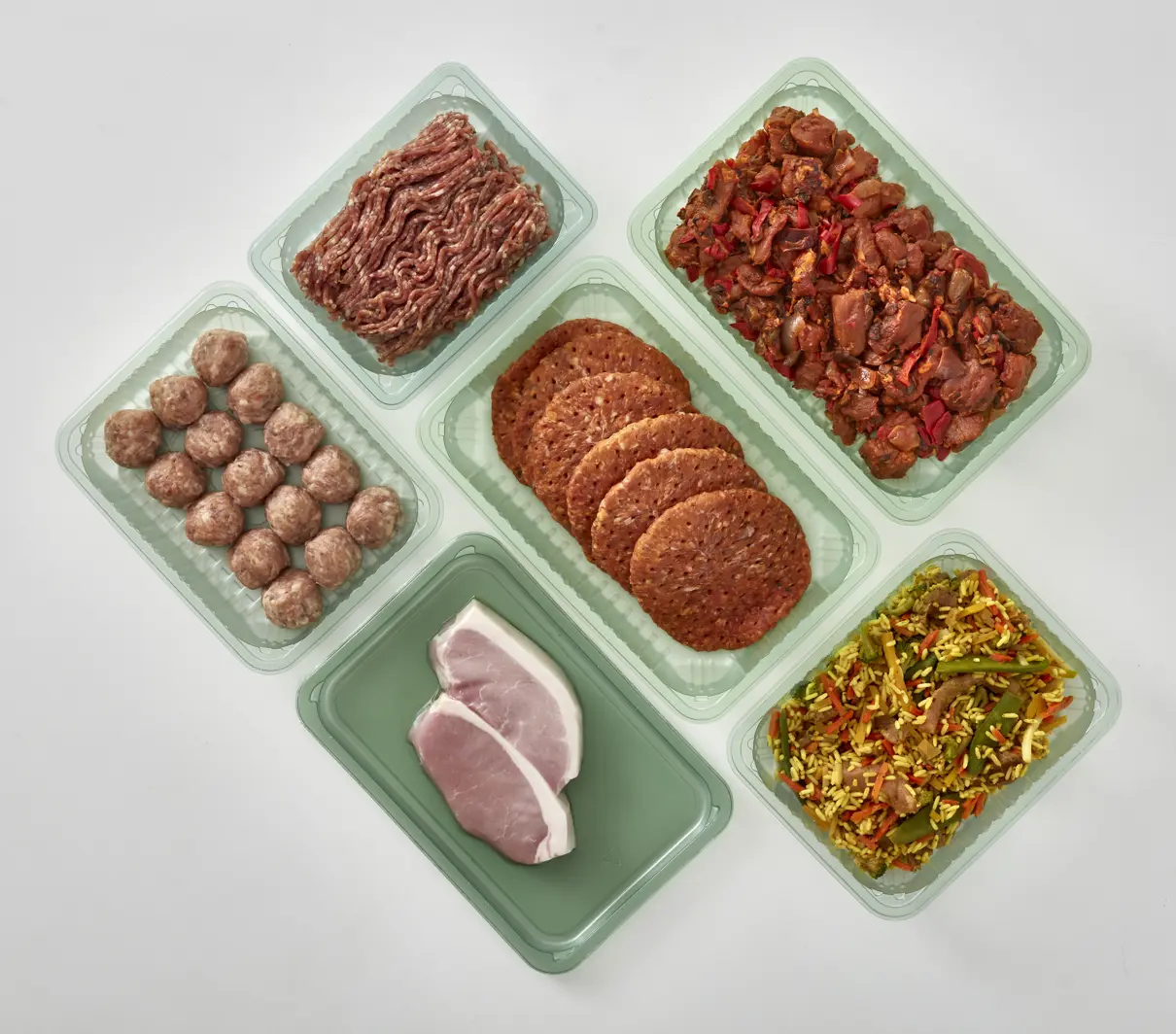
In Denmark, we reduced the volume of plastic for meat trays by making around 6.5 million trays 10% thinner. At the same time, we increased the volume of recycled PET plastic to 90%, and if the trays are sorted correctly, the volume of new plastic produced may In Denmark, we have reduced the amount of plastic for meat trays by making around 6.5 million trays 10% thinner. At the same time, we have increased the amount of recycled PET plastic to 90%, and if the trays are sorted correctly, this would mean a saving of around 72 tons of newly produced plastic each year.
The top foil used for sliced salami and other cold cuts has been changed from a deep draw lid to a resealable flat top lid, which has reduced plastic packaging by more than 25%. Other cold cut packages now have a new bottom foil, which has reduced plastic packaging by 28%. These changes provide a total annual reduction of around 37 tonnes of plastic.
We are introducing a new packaging material for bacon. The packaging consists of a sub-foil of 80% recycled plastic, bringing the total share of recycled plastic used in the packaging at minimum 60%. Labels and sleeves not included.
Tube packaging for mincemeat uses almost 90% less plastic than traditional meat trays.

According to the UN, 17% of all food ends up in the trash. It is expensive for the consumer, but also for society, because food waste accounts for up to 10% of the world's CO2 emissions. Therefore, we have decided that if a new type of packaging shortens the shelf life of the product, then we will not use that packaging.

We will never compromise on food safety, durability or the quality of our products when choosing a new packaging. Not even if that packaging scores high on sustainability. We can’t tolerate if food safety can be questioned in any way, and we believe that consumers fully agree with that priority.