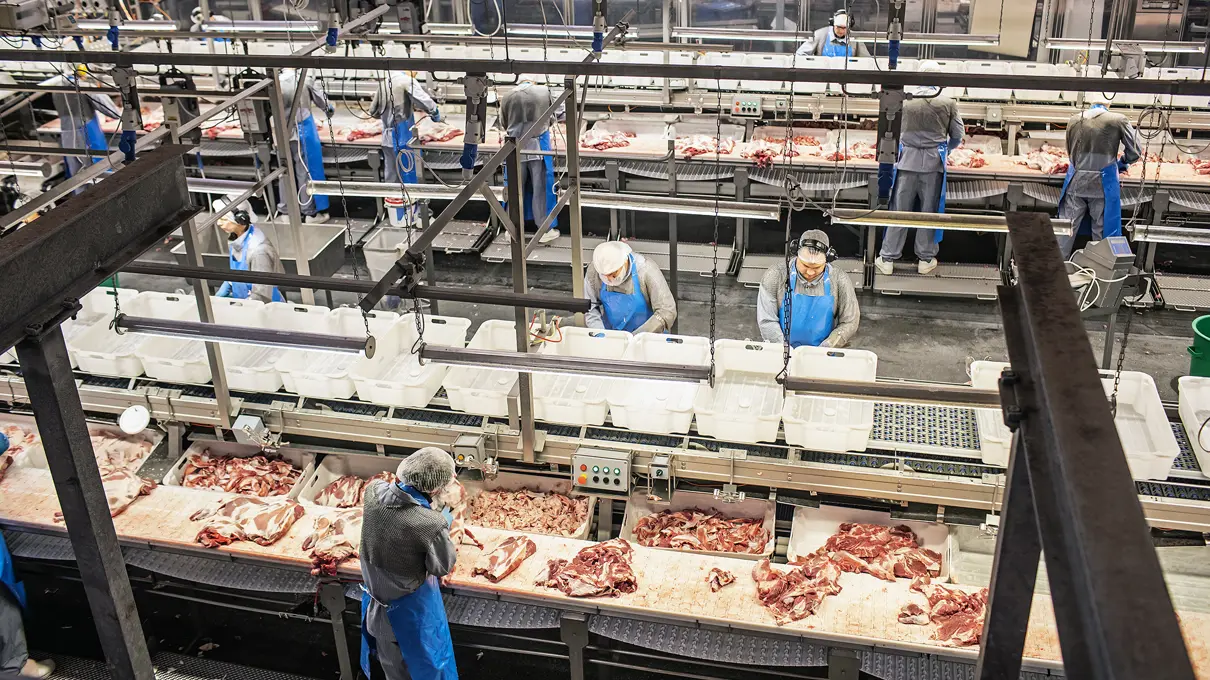
With increasing supplies of pigs from Danish farmers, Danish Crown needs additional capacity for deboning Danish pork. By expanding production in Denmark, Danish Crown ensures the ability to export finished products from the new facility to attractive markets, including Asia.
“It is fantastic that we are now hiring more employees. This is the result of once again receiving more pigs for slaughter, which creates a need for more hands. We have therefore carefully assessed where and how we could expand our production. By doing so in Denmark, we can sell the products fresh in Europe and as well export them frozen to customers around the world, and it is precisely this flexibility that we have prioritised,” says Niels Ulrich Duedahl, Group CEO of Danish Crown.
With operations expected to start around October 1st this year, the plan is to debone 60,000 pork foreends per week at the premises in Vejen, which Danish Crown already owns. The cuts will be supplied from the Group’s abattoirs in Horsens, Herning, Rønne and Blans near Sønderborg.
“In recent months, we have been utilising the deboning capacity at our Danish slaughterhouses to the fullest, which is why we need to expand. By establishing a specialised production facility in Vejen, we can achieve very high efficiency. At the same time, it will reduce complexity at our abattoirs, allowing them to operate more efficiently as well,” says Jesper Sørensen, SVP Production Danish Crown Industry.
The new factory will be established in part of the approximately 14,000 square metres of buildings that Danish Crown took over on April 1st, 2023. The buildings are already designed for food production, which is precisely why Danish Crown acted when they came up for sale. However, a minor refurbishment and modernisation of the premises will be required before they can be put back into use.
“The factory in Vejen is ideally located geographically in relation to our three abattoirs in Jutland. At the same time, it is an area with a strong tradition for food production, so we see good opportunities to attract the necessary workforce,” says Jesper Sørensen.
Danish Crown has already initiated the process of applying for the required permits. It is expected that these will be in place before the end of the first quarter of 2026, after which everything will be ready to commence production in two-shift operations from 1 October.